
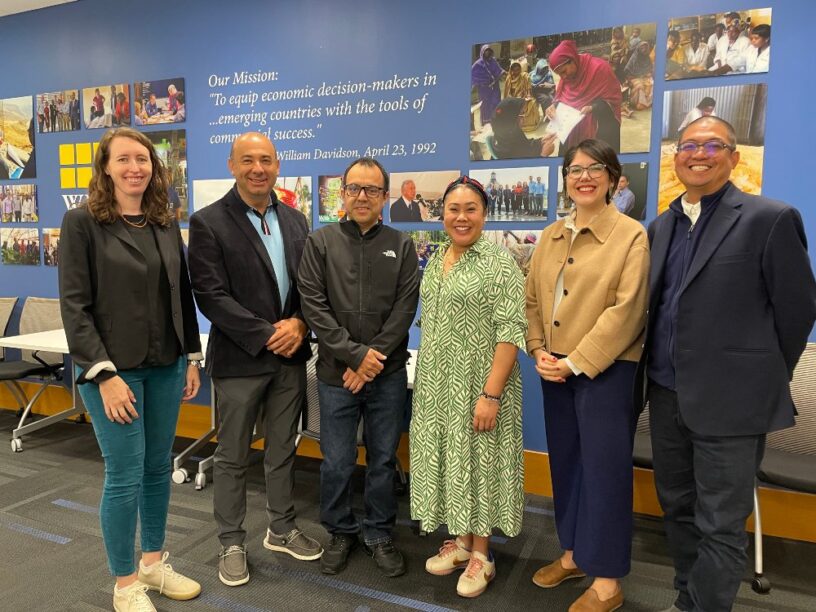



The Philippines has big ambitions for electric vehicles (EVs), but a new study warns that a major roadblock could be looming: a significant skills gap. A partnership between the Apl.de.Ap Foundation International (APLFI), the Asian Development Bank (ADB), and the William Davidson Institute (WDI), highlights the urgent need for a coordinated national strategy to train a new workforce for the EV industry.
The study, titled “Driving a Just Transition to E-Mobility in the Philippines,” brings a critical issue to light. It estimates that as many as 138,000 Filipino workers currently in internal combustion engine (ICE)-related jobs—from mechanics to auto parts suppliers—could be impacted by this transition. The challenge is ensuring these skilled workers aren’t left behind.
Bridging the Gap: The Need for Advanced Training
Currently, most EV training available in the country is focused on foundational skills like battery handling and charger installation. While important, this isn’t enough to support a rapidly evolving industry. The study stresses that for the Philippines to truly succeed in its EV push, it needs to build capacity for more advanced roles. This requires a more aligned approach between industry, government, and educational institutions.
The solution? APLFI and ADB are proposing a national EV Center of Excellence. This center would serve as a crucial hub to align all stakeholders, ensuring that workforce development keeps pace with policy and market growth.
A People-First Approach to a Green Future
This initiative is driven by a commitment to a “just transition,” where the shift to green technology benefits everyone. As Apl.de.Ap, founder of APLFI, stated, “It has always been about people first. We wanted to make sure that the shift to e-mobility does not just benefit a few, but truly creates opportunities for workers, communities, and young people across the Philippines.”
Audie Vergara, APLFI’s Executive Director, echoed this sentiment, noting that the proposed center would “help bridge gaps between policy and practice, foster collaboration across the public and private sectors, and accelerate the development of a skilled, inclusive workforce.”
Industry experts agree. WDI’s Diana Páez highlighted the need for support systems like retraining programs and social protections to ensure “no one is left behind.” ADB’s James Leather also emphasized that workforce development is a key factor in driving EV adoption, stating that the ADB is actively working with stakeholders to support policy and investments in the sector.
With a clear roadmap for inclusive workforce development, the Philippines can ensure its EV ambitions are not just a green dream but a sustainable reality for its people.

- Power Beyond Limits: Pylontech and IAN Solar Introduce the Fidus Battery Max to the Philippines - September 22, 2026
- Ultimate, Unified: Anker Unveils a New Era of Innovation in the Philippines - September 22, 2026
- Palawan Group, DSWD MIMAROPA Partner to Help 4Ps Families Build Financial Resilience - September 22, 2026

























Leave a Reply