




The Philippines has long been known for its breathtaking coastlines, but the communities that call these shores home face significant challenges. Despite a national law to boost the local salt industry, the country imports a staggering 93% of its salt needs. Traditional salt farming has fallen into decline due to climate change, lack of technology, and the fading interest of younger generations. But a new, brilliant solution is here, and it’s a homegrown one.
John Carlo Luna Reyes, a student from the University of the Philippines Diliman, has been named the national winner of the prestigious 20th James Dyson Award for his invention, SolAsin. This simple yet powerful innovation is designed to empower coastal communities and bring back the once-thriving Philippine salt industry.
The Invention: SolAsin
Inspired by his hometown of Pangasinan, which means “a place where salt is made,” Reyes developed SolAsin to provide a sustainable and accessible source of livelihood for salt farmers. Unlike traditional salt beds that require vast amounts of land and capital, SolAsin is a compact, sustainable, and user-friendly unit.
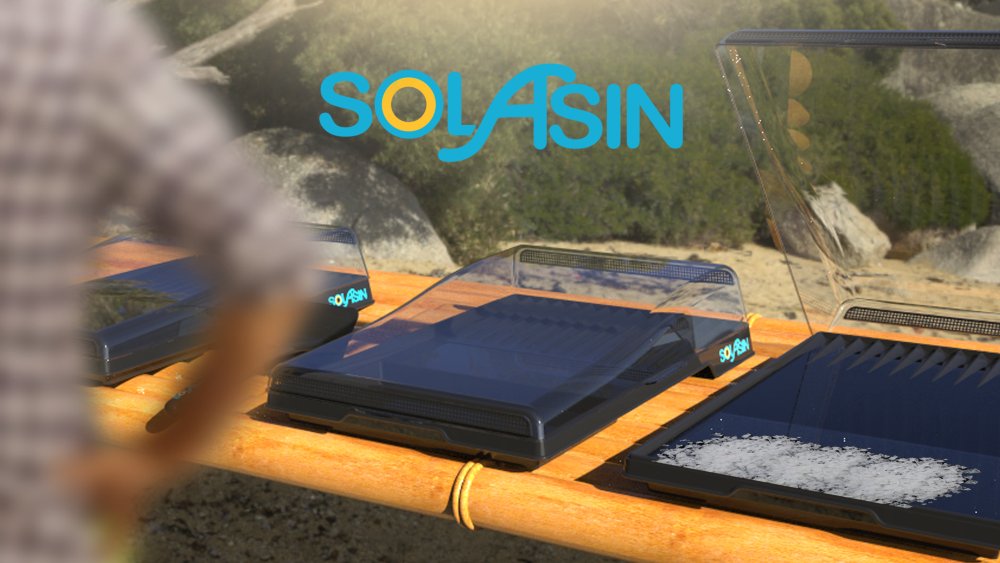
Here’s what makes it a game-changer:
- Solar-Powered Production: SolAsin uses only filtered seawater and sunlight to produce high-value flaky salt. This method is not only environmentally friendly but also bypasses the need for large-scale infrastructure.
- High-Value Product: The unit produces flaky salt, a premium variant that commands a higher market price compared to standard table salt. This allows communities to generate significant income with smaller quantities, which can be sold to local hotels, restaurants, and tourists.
- Community-Driven Design: Reyes developed and refined the design through extensive fieldwork and close consultation with coastal residents and local government. This collaborative process ensures the invention is both practical and truly beneficial to the people it’s meant to serve.
For his ingenuity, Reyes received a ₱361,300 prize, which he plans to use to refine the design, improve materials, and prepare SolAsin for mass production. This award is a testament to how creative problem-solving can directly address real-world issues.
The Runners-Up: Two More Ingenious Filipino Inventions
The Philippines’ strong showing at the James Dyson Award didn’t stop with SolAsin. The two national runners-up, both from Mindanao State University – Iligan Institute of Technology (MSU-IIT), also showcase a brilliant blend of sustainability and innovation.
ChillWise
With rising temperatures and high energy costs, many Filipinos struggle to keep their homes and schools cool. ChillWise offers a passive, energy-efficient cooling panel system. It’s made from lightweight foamed concrete and incorporates agro-waste like rice hull and fly ash.
Key Features:
- Passive Cooling: The panels absorb heat during the day and release it at night, naturally moderating indoor temperatures without the need for electricity.
- Energy-Efficient: It can reduce energy use by up to 95% compared to conventional concrete, offering a cost-effective and eco-friendly solution to staying cool.
- Sustainable Materials: By using agro-waste, ChillWise promotes circular design, turning agricultural byproducts into a useful building material.
Lambooply
The Philippines faces challenges with deforestation and a heavy reliance on imported wood. Lambooply is a durable, eco-friendly composite material designed to tackle this problem head-on.
Key Features:
- Sustainable Sourcing: The material is made from abundant native resources: bamboo and cattail grass (Lampakanay).
- Eco-Friendly Manufacturing: It uses non-toxic adhesives to create a composite that is strong and stable.
- Versatile Applications: Lambooply can be used for both structural and non-structural applications, providing a sustainable alternative to traditional wood and synthetic materials.
All three brilliant inventions—SolAsin, ChillWise, and Lambooply—will now advance to the international stage of the James Dyson Award. They are in the running to win the global prize of ₱2,168,000, with the international shortlist to be announced on October 15 and the global winners on November 5. These inventions are not just products; they are powerful examples of how Filipino innovation can solve global problems and create a brighter, more sustainable future.

- From Remittance to Insurance: Palawan Group’s Consumer-Led Approach Wins Gold - September 20, 2026
- Nadine Lustre and Apl.de.Ap Just Dropped Their DONUTS Music Video - September 20, 2026
- VALORANT Dev Update: New Automatic Rifle, Experimental Game Mode, and Ranked Overhauls - September 20, 2026


























Leave a Reply